

This week in San Diego history: July 6–10, 1939, flying boats, the Navy, and Australian wildlife


In early July 1939, San Diego wasn’t defined by a single headline. It was defined by movement — in the air, on the water, and in the slow reshaping of civic space.
Within the span of just a few days, the city reflected three different versions of itself: a place testing the limits of aviation, expanding its global connections, and adjusting to the pressures of a changing nation.
July 6, 1939 — A flying boat returns to San Diego Bay
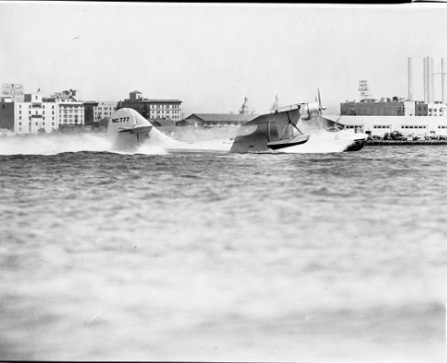


On July 6, a flying boat — also known as a seaplane — connected to Richard Archbold’s global aviation survey efforts returned to San Diego Bay after completing an equatorial route used to test long-distance air travel paths across oceans and continents.
San Diego was already deeply tied to aviation by this point. Naval Air Station North Island was active, civilian aviation was growing along the waterfront, and the bay itself functioned as an open landing field for experimental aircraft.
The return flight was part of a broader period when aviation was still being mapped out as much as it was being used — with aircraft testing what global distance could realistically look like in practice.
July 7–8, 1939 — Balboa Park land moves toward Navy use

While aviation activity played out on the water, civic decisions were unfolding inland.
On July 7 and 8, 1939, San Diego city officials and federal representatives advanced discussions involving the use of Balboa Park-adjacent land for U.S. Navy purposes connected to Naval Hospital expansion. A proposed lease covering approximately 16 acres moved through approval channels, reflecting the growing overlap between civic space and military infrastructure.
The shift was subtle on the ground but significant in direction. Public land that had been part of San Diego’s cultural and recreational identity was increasingly being considered in terms of national defense needs as global tensions continued to rise.
July 7, 1939 — Rare Australian animals arrive at the San Diego Zoo
On July 7, the San Diego Zoo received a shipment of animals from Australia, part of its expanding international exchange program during the early 20th century.
The cargo included species such as Tasmanian devils, tiger snakes, and other reptiles and marsupials — animals that were rarely transported across oceans at the time due to the complexity of long-distance live animal travel.
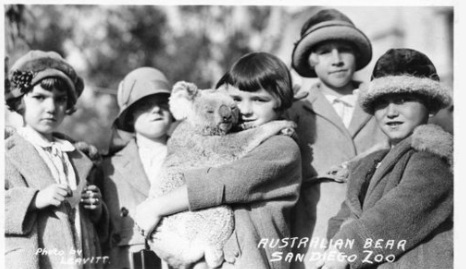
The arrival reflected the zoo’s growing global reach and San Diego’s increasing role in international scientific and cultural exchange networks.
A city in quiet transition
Taken together, the events of July 6–10, 1939, show a city in motion on multiple levels.
Aviation was pushing outward into global routes that were still being defined. Civic leaders were reshaping how public land would be used as military needs expanded. And international scientific exchange was arriving directly into the region through maritime transport.
None of it dominated the week on its own. But together, these moments reveal a San Diego that was no longer purely local — and not yet fully transformed by the wartime expansion soon to follow.
It was a city adjusting in real time to a future that was already beginning to arrive.
Read more history stories here, and do you have a story to tell? Send an email to DebbieSklar@cox.net.
Sources:
San Diego History Center — archival timelines and civic records
San Diego Air & Space Museum — early naval aviation and seaplane operations context
City of San Diego records — Balboa Park land use and civic planning history
San Diego Zoo historical archives — international animal exchange history
Categories
Recent Posts


GET MORE INFORMATION